
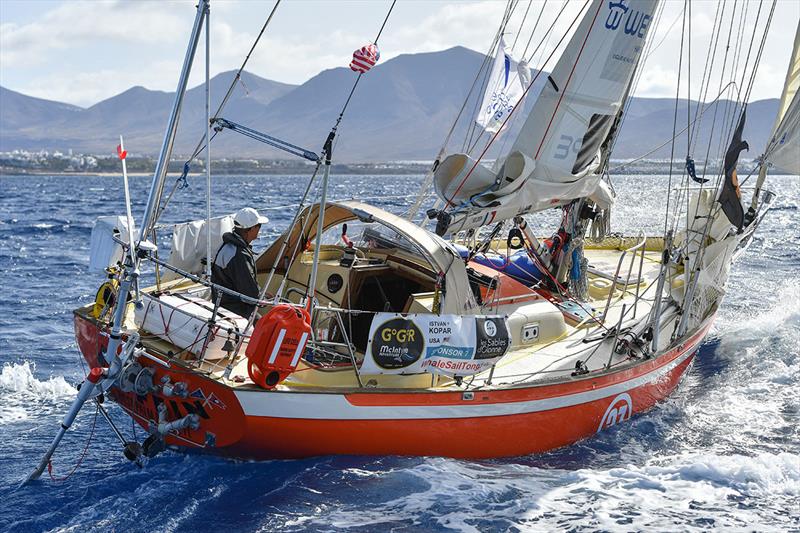
The Most Dangerous Sailing Race & The San Diego Skipper Who Plans To Win It
photo above by Christophe Favreau
As I peeled off the 405 and drifted toward Shelter Island, the air thickened into a cool, briny mist—a damp curtain that carried the salty, metallic tang of a hard working sailor’s marina. The fog was slowly burning off as the sun inched higher above the skyline.
San Diego’s marinas have a certain order to them—clean lines, polished teak, the quiet confidence of things that are maintained because someone cares. Mo Chuisle sat among the salty vessels, but she didn’t look like she belonged to the same world. Her hull was a sun bleached ivory, her lines hunter green, her presence more adventurous than decorative—like a tool that had earned its right to exist over decades of use.
As I headed down the gangway I see Colm on deck, bent over the cockpit working with the calm focus of a man who has spent years training his body to obey his mind. He was tightening a shackle with the supreme focus as if the whole world depended on that one small turn of metal. After all, Colm wasn’t just preparing a sailboat. He was preparing for the adventure of a lifetime – a nonstop, solo sailing race around the world … without navigation equipment.
The History of the Golden Globe Solo Sailing Race
The Golden Globe Race is a unique solo challenge, requiring sailors to navigate non-stop, unassisted by crew or technology around the planet. The Golden Globe Race is not a modern sailing event so much as a deliberate act of resistance. Conceived in 1968, it rejects nearly every technological convenience that now defines offshore racing. No GPS. No satellite routing. No autopilots. Sailors navigate the way mariners once did—by sextant, paper charts, dead reckoning, and an intimate understanding of wind, current, and human limitation.
The Golden Globe Race began at the dawn of solo ocean racing, when the idea of sailing around the world alone was considered reckless, if not impossible. Nine sailors set off on that first attempt. Only one finished. Sir Robin Knox-Johnston spent 312 days at sea, navigating without modern instruments, enduring storms, mechanical failures, and months of isolation to become the first person to sail solo, non-stop, around the planet.
Others became legends for different reasons. Bernard Moitessier, leading the race and within reach of victory, chose to turn away from the finish line and chart a course to Tahiti in a quiet rejection of the competition. Other competitors were less fortunate, their stories marked by exhaustion, loss, and tragedy—early proof that the race demanded far more than seamanship. It demanded a willingness to endure long stretches of uncertainty with no margin for error.
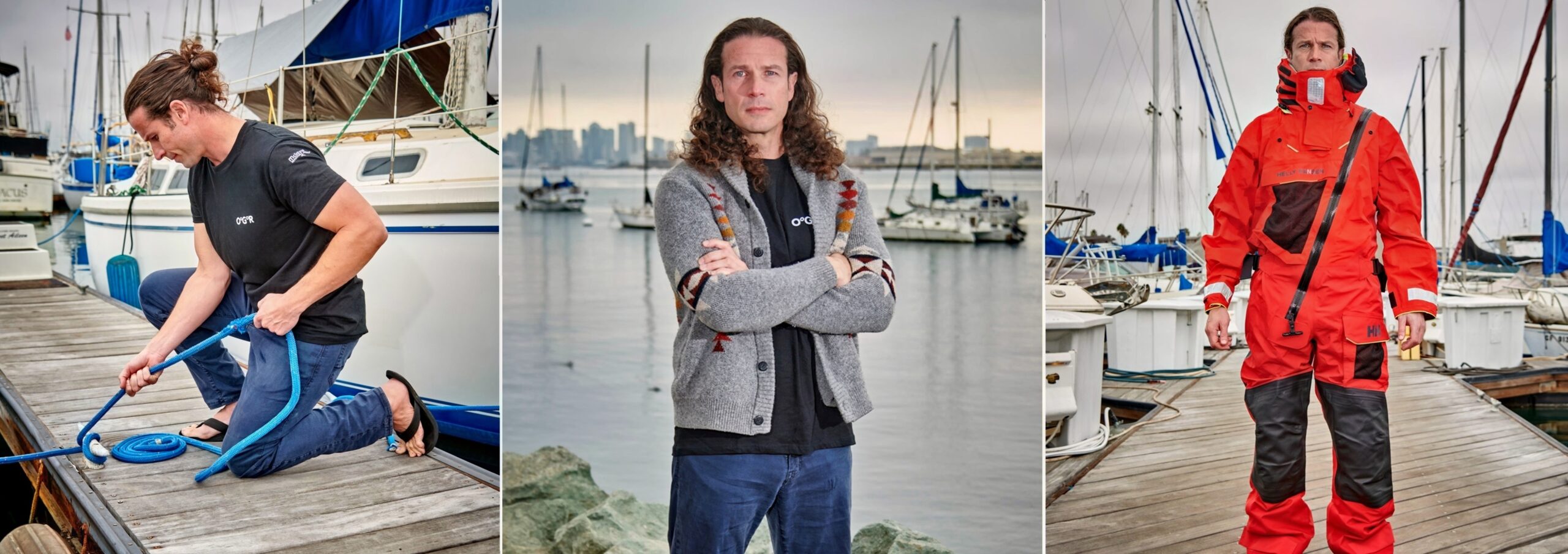
Representing San Diego In The GGR: Colm Walker
Colm Walker didn’t arrive at the Golden Globe Race by accident. He sprinted to it with a résumé built on responsibility and self-reliance. A graduate of Norwich University, Colm served as an officer in the U.S. Army and deployed with the 82nd Airborne Division during Operation Enduring Freedom. Long before solo sailing entered the picture, he was operating in environments where preparation and mistakes carried immense weight.
As a sailor from San Diego, Colm carries the legacy of the city’s rich maritime history into the race. From the triumphs of Dennis Conner and Stars & Stripes in the America’s Cup to the bustling spirit of its waterfront, San Diego has long been a beacon of sailing excellence.
“San Diego is rich with sailing stories,” Colm says. “The city’s connection to the sea, its history, and its community inspire me to represent it on the world stage.”
What drew Colm to the Golden Globe Race wasn’t spectacle, but its structure. “I’ve always been drawn to the individual challenge and the history of the Golden Globe Race,” Colm told me. “It’s an opportunity to honor the legacy of those who came before, while testing my own limits in the most profound way.”
That respect for legacy extends to his boat, Mo Chuisle (Irish for My Pulse), a Tayana 37 that Colm has methodically rebuilt and prepared with a team assembled out of San Diego. He doesn’t describe her as equipment. “I see the race as a partnership between the skipper and the boat,” he said. “Mo Chuisle represents my heartbeat, my pulse. She is my co-adventurer in the race. We need to be in sync and work as one.”
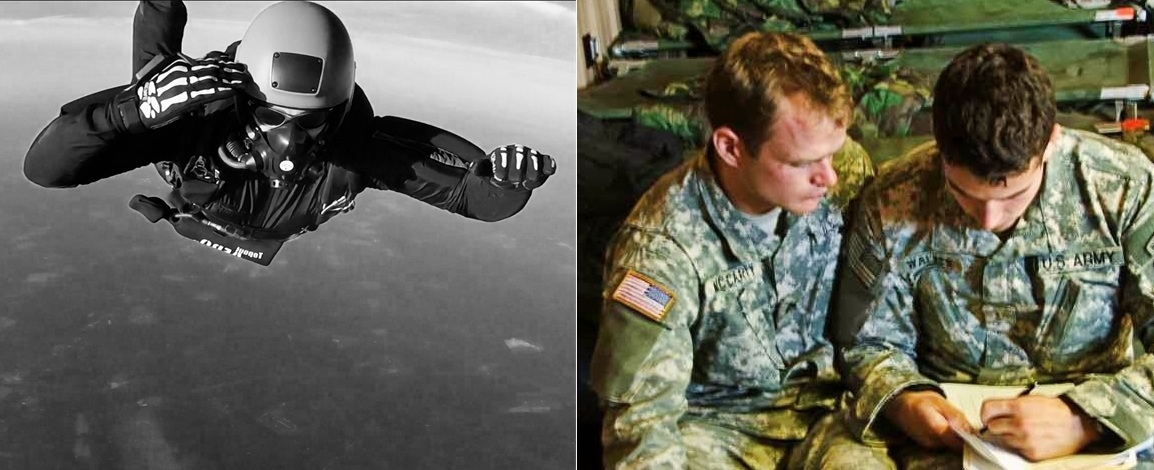
Preparing Mo Chuisle for her first sail around the world has been both rewarding and challenging. Life often gets in the way of the perfectly laid out plans. While Colm has been fully engaged in the preparation of his sailboat and seamanship for the past 16 months, he must give max effort to fundraising and publicity. That’s why he tapped The Rugged Male. We did not hesitate to come aboard!
Colm is hard at work preparing for his late-February departure from San Diego, focused on ensuring the boat is as safe and efficient as possible for the journey through the Panama Canal to the U.S. East Coast and onward to the GGR start line in Les Sables d’Olonne, France.
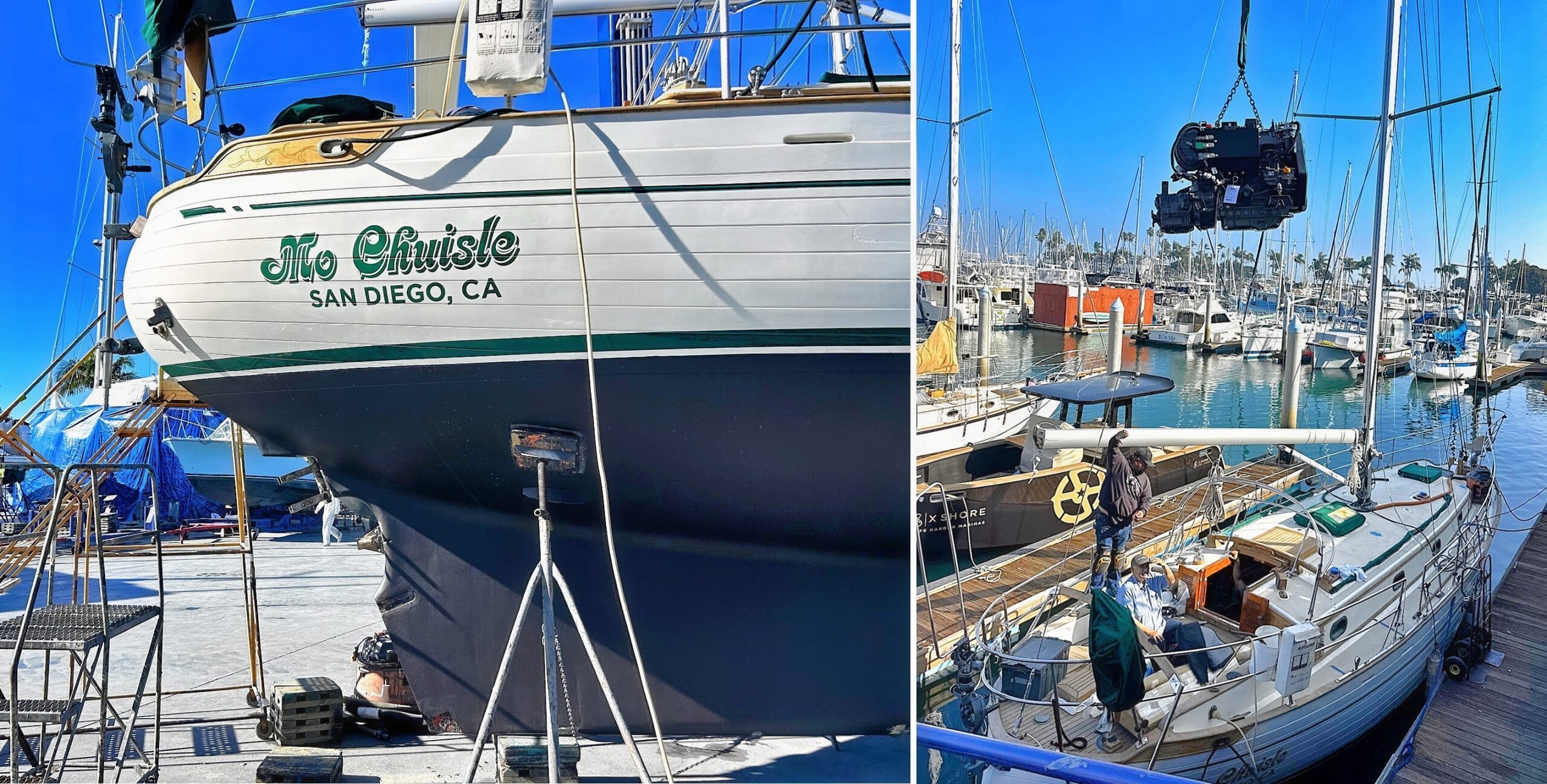
The Current Tide With Colm Walker & Mo Chuisle
Recent upgrades to the boat include a new engine, a new water filtration system, fresh paint, a new boom and mast, a new water tank, a refrigerator-freezer, and new batteries. He is actively provisioning the boat with everything needed to remain healthy and strong during the long passages ahead, including food, water, and emergency medical supplies. He has also earned his EMT license, enabling him to effectively self-rescue should an incident occur at sea, as well as his HAM radio license for reliable offshore communication. Colm has also earned certification in marine diesel maintenance and repair, ensuring he can effectively troubleshoot and address engine issues while at sea.
As part of his adherence to the traditional navigation requirements of the Golden Globe Race, Colm has assembled a complete set of official paper navigation charts and publications, covering every ocean he will sail. These include the most up-to-date charts and reference materials required for the Southern Ocean and other remote regions of the world.
Colm has analyzed 2022 Golden Globe Race data to guide the preparation of Mo Chuisle, examining fleet performance, environmental exposure, and failure modes. Key focus areas include self-steering redundancy, light-air speed optimization, storm survivability, and proactive maintenance of sails, rigging, and hull. He is also prioritizing human factors, managing fatigue, nutrition, and emotional resilience to reduce the risk of errors during long passages. This data-driven approach ensures that both Colm and Mo Chuisle are fully prepared to not only compete in this race, but a chance to win.
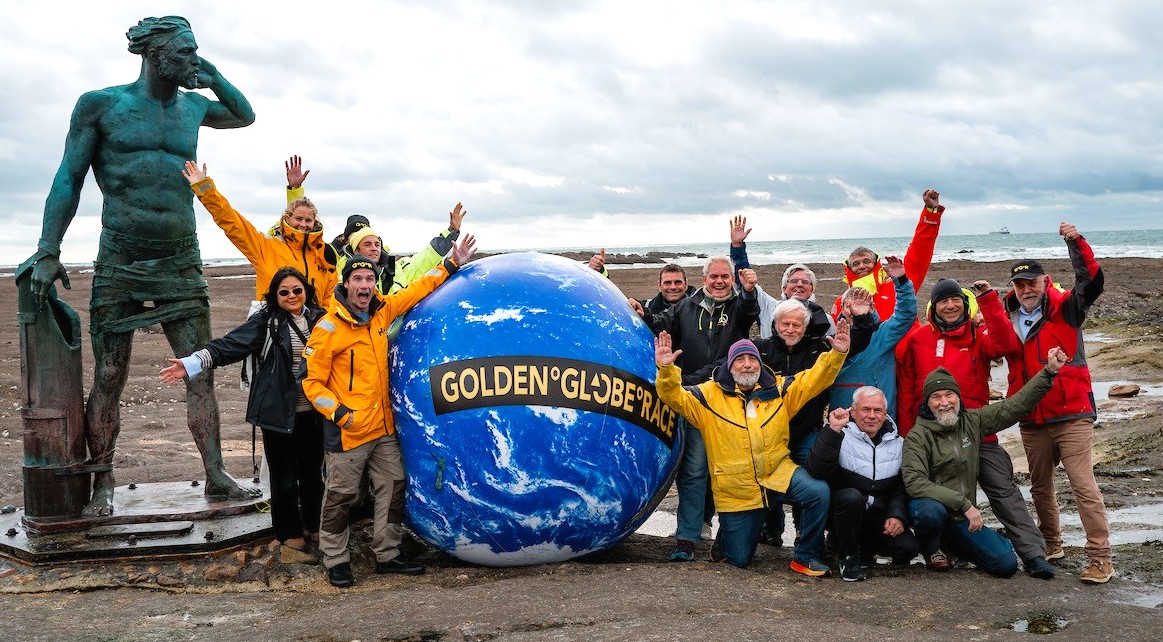
In November Colm visited Les Sables d’Olonne to connect with the race organizer, Don McIntyre, meet the majority of the 2026 GGR skippers, participate in a press conference, and familiarize himself with the start line site.
Chart a Course For Your Brand
All hands on deck! On the business front, Colm is actively seeking sponsors to join him on this extraordinary journey. Selected sponsors will receive full branding rights on Mo Chuisle and global exposure to more than 150 million viewers across 120 countries. This is a rare opportunity for a brand to align with one of the most authentic, demanding, and widely followed events in sailing.
Sponsorship packages start at a very reasonable $12K. Interested parties are invited to connect now to become part of a truly historic adventure race. If your brand or a brand you know is interested in sponsorship kindly reach out to info@maxsportsmarketing.com for more information.
Thank You For Reading and Supporting The Best Men’s Lifestyle Blog!
You Might Also Like