
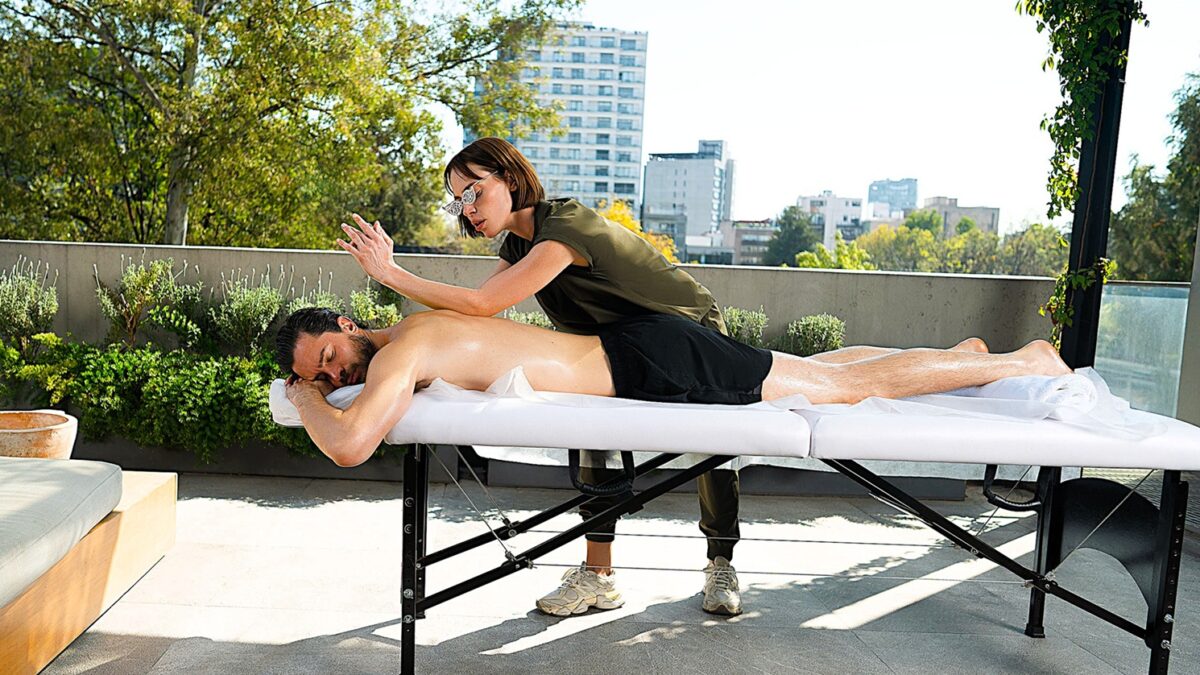
The Lost Art of a Damn Good Massage
Somewhere along the way, the massage got buried.
Buried under marble desks, whisper voices, cucumber water, robes, slippers, and spa menus so long they should come with a sommelier. You came in wanting someone to fix your back and somehow ended up choosing between seven kinds of “renewal” while sitting in a hallway dressed like a retired Roman senator.
That is why LAXLAB in Mexico is catching people’s attention.
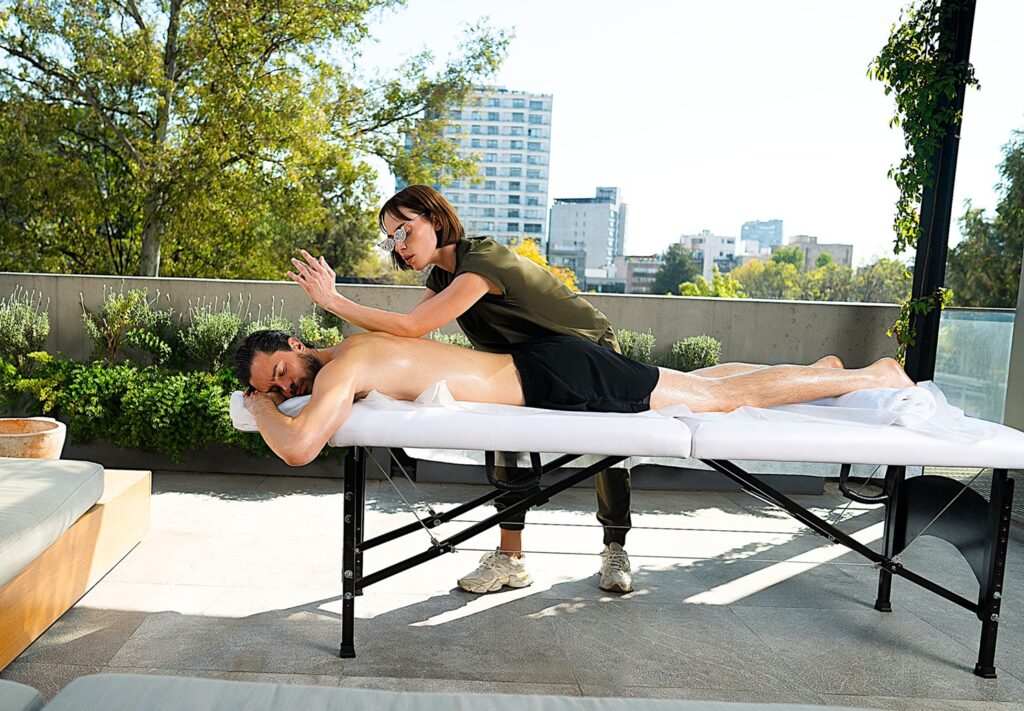
The concept is not trying to win the hotel spa game. It seems to be playing a different one entirely. One signature massage. Private spaces. Direct booking. Rooms with actual personality. A massage table designed in-house. Enough theater to make the hour feel special, but not so much that you forget why you came in the first place. Because the problem was never the ritual. The ritual is half the point. The problem is that too many spas forgot the damn massage.
One Massage, No Menu Circus
Here is one of the smartest things about the concept: it does not bury you in a giant menu of treatments that all sound suspiciously alike. There is a menu, yes. But the heart of the experience is one signature massage — a blend of several techniques designed to feel complete, fluid, and intentional. Less like a resort spa trying to impress you with thirty variations of scented oil, more like a good restaurant with a short menu. You do not go to a serious restaurant because it has 97 dishes. You go because someone in the kitchen knows exactly what they are doing. Same idea here.
And then there is the table.
The brand uses a massage table designed in-house, which is the kind of detail that separates a real concept from a random service listing. Anyone can buy equipment. Designing your own table means you have opinions. Strong ones. Useful ones. When a brand cares about the table, it probably cares about the hour you spend on it.
Mexico City Will Wear You Down in the Best Way
Mexico City gives you everything.
Architecture. Food. Museums. Rooftops. Traffic. Altitude. Late dinners. Good coffee. Better cocktails. Roma gives you leafy charm. Condesa gives you dogs, cafés, and a suspicious number of attractive people walking nowhere in particular. Polanco gives you glass, money, restaurants, and the feeling that someone nearby owns a very serious watch.
It is a hell of a city. It also wears you down.
Not in a bad way. More like a great boxing coach. Mexico City gives you the round of your life, pats you on the back, then sends you out before you have fully recovered from the first. That is where the standard hotel spa starts to feel tired. Mexico City is too alive, too layered, too specific for a copy-paste spa room with imported calm. The city deserves something with more character.
This setup seems built for that exact moment — when you still want the city, but your body wants a ceasefire.
What If a Spa Wasn’t One Place?
The interesting thing is not just that it offers massage. Plenty of places offer massage. Some good. Some bad. Some with music that sounds like a whale learning the flute.
The interesting thing is the format.
The idea first took shape in Monterrey, then moved to Mexico City, where it became bigger, sharper, and more defined. Somewhere along the way, the question became obvious: what if a spa was not one place?
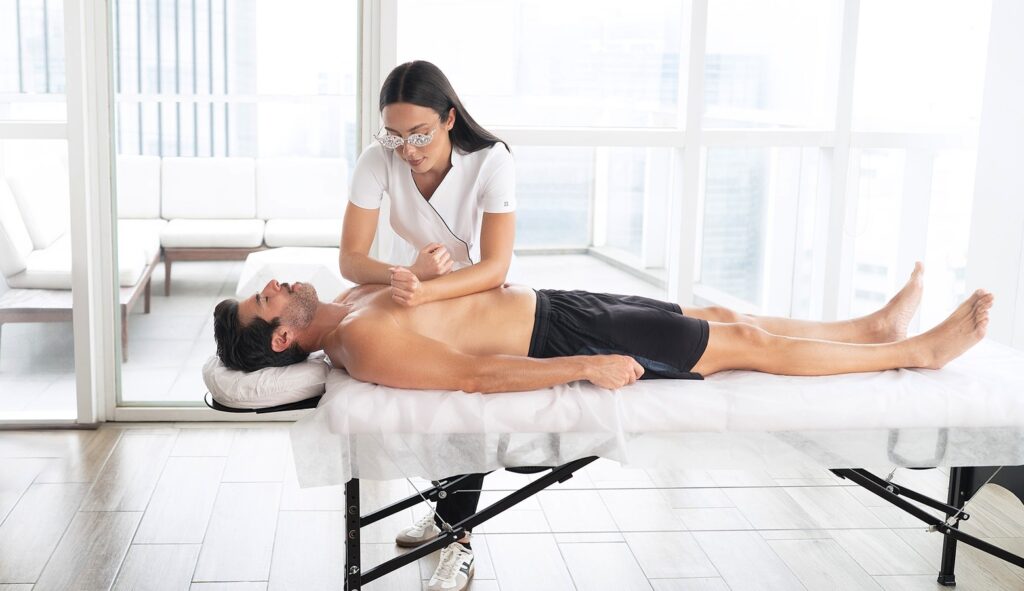
Most spas are built around one address. One reception desk. One hallway. One aesthetic repeated until everyone agrees it is “on brand.” This model went the other way. Instead of forcing every room to look the same, it grew as a collection of private spaces where each therapist operates her own environment.
One room might feel lunar and cinematic. Another might lean into nature. Another might feel architectural, minimal, or quietly strange in the best possible way. That matters. Because when every space is allowed to have its own personality, the experience stops feeling like a transaction. It feels like a discovery.
The environments change. The essence remains.
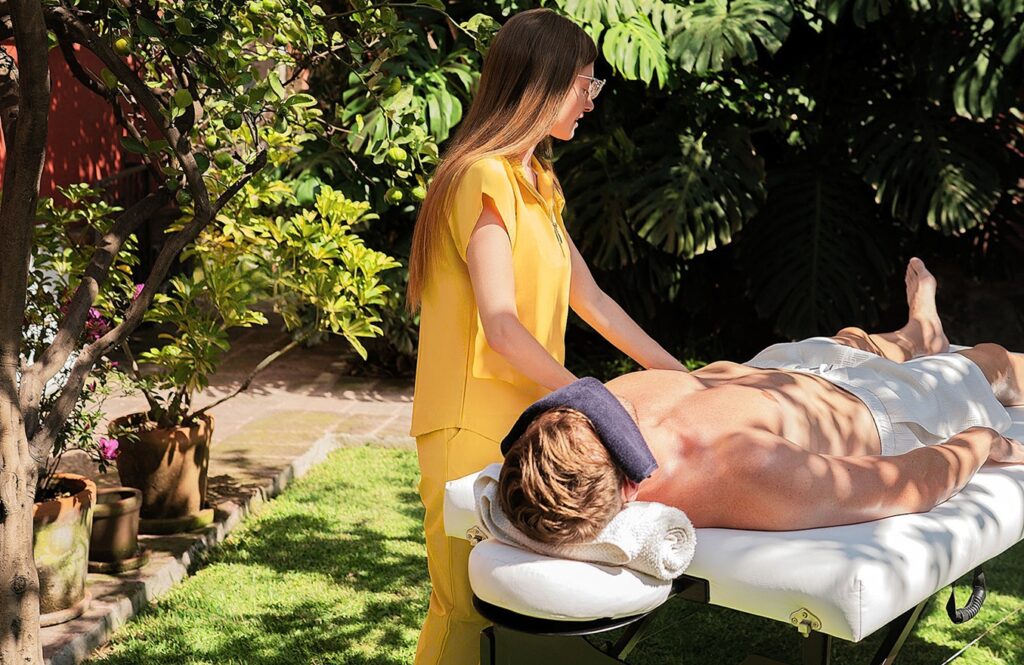
A Model Built to Travel
Mexico City became the laboratory, which makes sense. This city is big enough to demand flexibility, stylish enough to care about design, exhausting enough to make recovery necessary, and international enough that travelers understand why privacy, convenience, and a good room matter.
But the idea does not belong only to Mexico City.
The model now has presence in other parts of Mexico: Monterrey, where business travel and serious money create their own kind of pressure; Guadalajara, with its mix of tradition, design, and urban confidence; Querétaro, polished and quietly ambitious; Cancún and Los Cabos, where travelers already understand the appeal of privacy, sun, water, and escaping the shared resort circuit whenever possible.
That is why LAXLAB feels less like another massage company and more like an idea with legs. A private reset. A serious massage. A room with a point of view.
Final Thoughts
The hotel spa is not dead. But it is tired. Too many of them feel like expensive waiting rooms with better towels. Too much ritual, not enough soul. Too much menu, not enough confidence. Too much theater, not enough reason to remember it.
What works here is simple: a damn good massage does not need to be buried under nonsense. It needs a good room, a good table, a clear method, and just enough theater to make the hour feel like something you entered — not just something you booked.
A good trip is not only about where you eat, drink, sleep, and wander. It is also about how well you recover between chapters. And in Mexico City, after the altitude, the traffic, the mezcal, the late dinners, and the
hotel pillow that tried to ruin your neck, that lost art starts to feel very necessary.
Thank You For Reading The Rugged Male, The Best Men’s Travel & Lifestyle Blog!
You Might Also Like